
Kimble County Court Records After Arrest
After a Kimble County arrest, the jail booking charge is only the first label in the process. The person may be booked by the sheriff or held through another lawful authority, then taken before a magistrate under Texas law. The prosecutor later decides what formal charge to file, and that filing opens or updates the court record. A booking charge can be amended, reduced, dropped, or replaced by a complaint, information, or indictment.
Use Kimble County jail inmate records for custody and booking status. Use court records for the filed charge, court number, court setting, attorney record, bond condition, disposition, and case history. Booking photos are a separate records issue handled on the Kimble County jail mugshots page. Keeping those three record types separate helps prevent a common mistake: treating the first jail entry as the final court accusation.
Search Kimble Court Records After Arrest
The Kimble County Clerk page states that records searches include the Tyler Portal for criminal cases only. The District Clerk page repeats that Tyler is the criminal case search path and lists re:SearchTX for civil cases. For court records after a Kimble County jail arrest, the Tyler criminal portal is the first online court source.
- Confirm the arrest or custody event through VINELink, the sheriff, or jail records if needed.
- Open the Kimble Tyler criminal portal linked by county clerk pages.
- Search by defendant name or case number. Use spelling variants if the first search fails.
- Open the case result and read the filed charge, case type, court, settings, bond entries, and disposition if listed.
- If the case does not appear, contact the County or District Clerk at 325-446-3353 because recent, older, restricted, or sealed records may not display online.
The County Clerk records page shows the local routing for criminal case searches and related record systems.
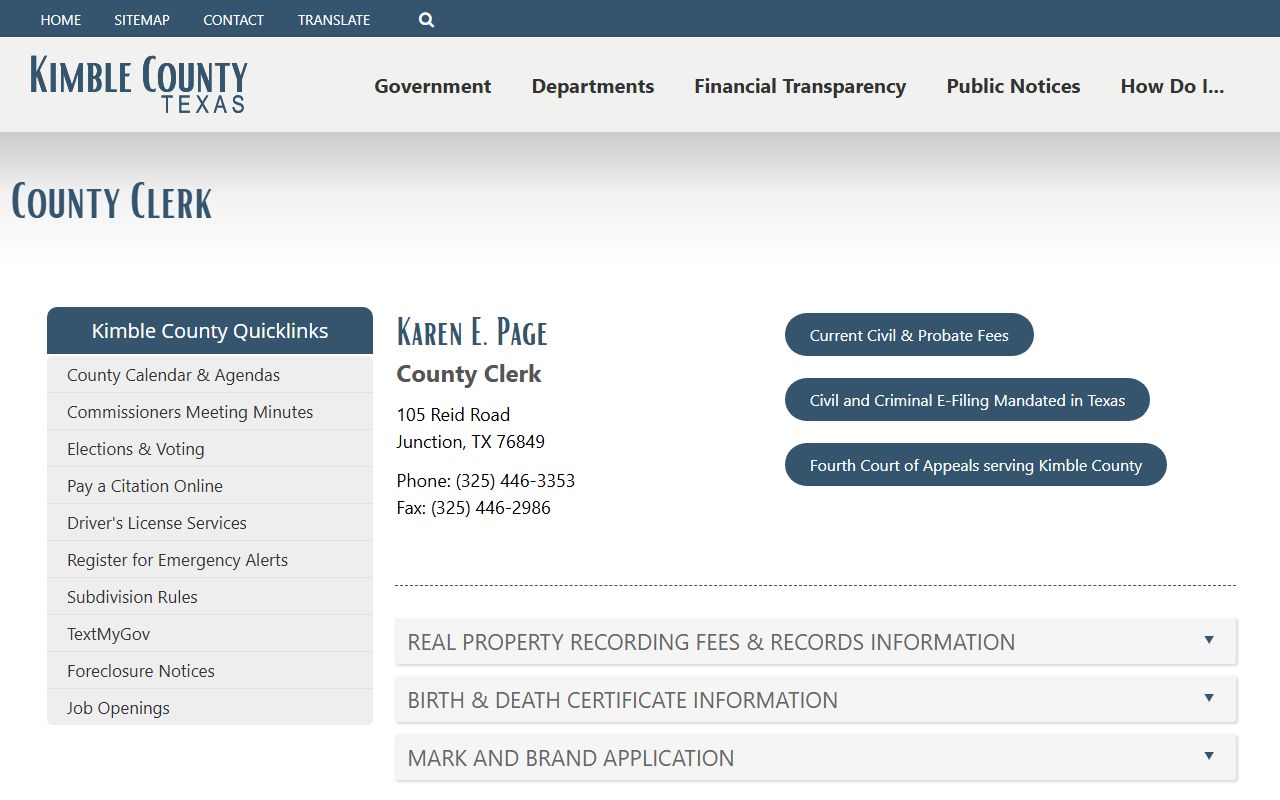
That portal routing matters because Kimble County court records after arrest are not the same as VINELink custody notices or jail booking photos.
Kimble Court Search Fields
The Tyler portal fields could not be fully inspected without relying on a live session, so the table uses the partial field inventory supported by the research. Name and case number searches are the most important fields. Document access may depend on portal settings, account rules, payment rules, or clerk review.
| Field Label | Type | Required | Notes |
|---|---|---|---|
| Smart Search or Case Search | Text | Unspecified | Tyler portals commonly support name or case-number searching. |
| Record or case number | Text | Optional | Use the number from bond paperwork, court notices, or clerk documents when known. |
| Party or defendant name | Text | Optional | Search last name and first name when the case number is unknown. |
| Date range or advanced filters | Date/filter | Optional | May be available through advanced filtering in the current portal. |
| Register or login | Account action | May be needed | Index search may differ from document access. |
Kimble Arrest Charging Documents
Court records after a jail arrest usually begin with a charging document. The document type depends on the offense level and procedural stage. A complaint may support an initial charge. An information is filed by a prosecutor in many misdemeanor cases and some felony settings. An indictment comes from a grand jury and is most tied to felony prosecution. Kimble County felony cases are served by the 452nd District Attorney, while the County Attorney is relevant to local misdemeanor prosecution.
| Document | Filed By | Common Use | What to Check |
|---|---|---|---|
| Complaint | Officer or prosecutor | Initial accusation or lower-level filing | Name, date, offense, probable-cause basis, and court. |
| Information | Prosecutor | Many misdemeanors and some felony procedures | Filed charge, offense class, prosecutor signature, and amendments. |
| Indictment | Grand jury | Felony prosecution | Count list, felony degree, alleged conduct, and case number. |
The 452nd District Attorney page is one of the local prosecution sources for Kimble County felony court records after arrest.
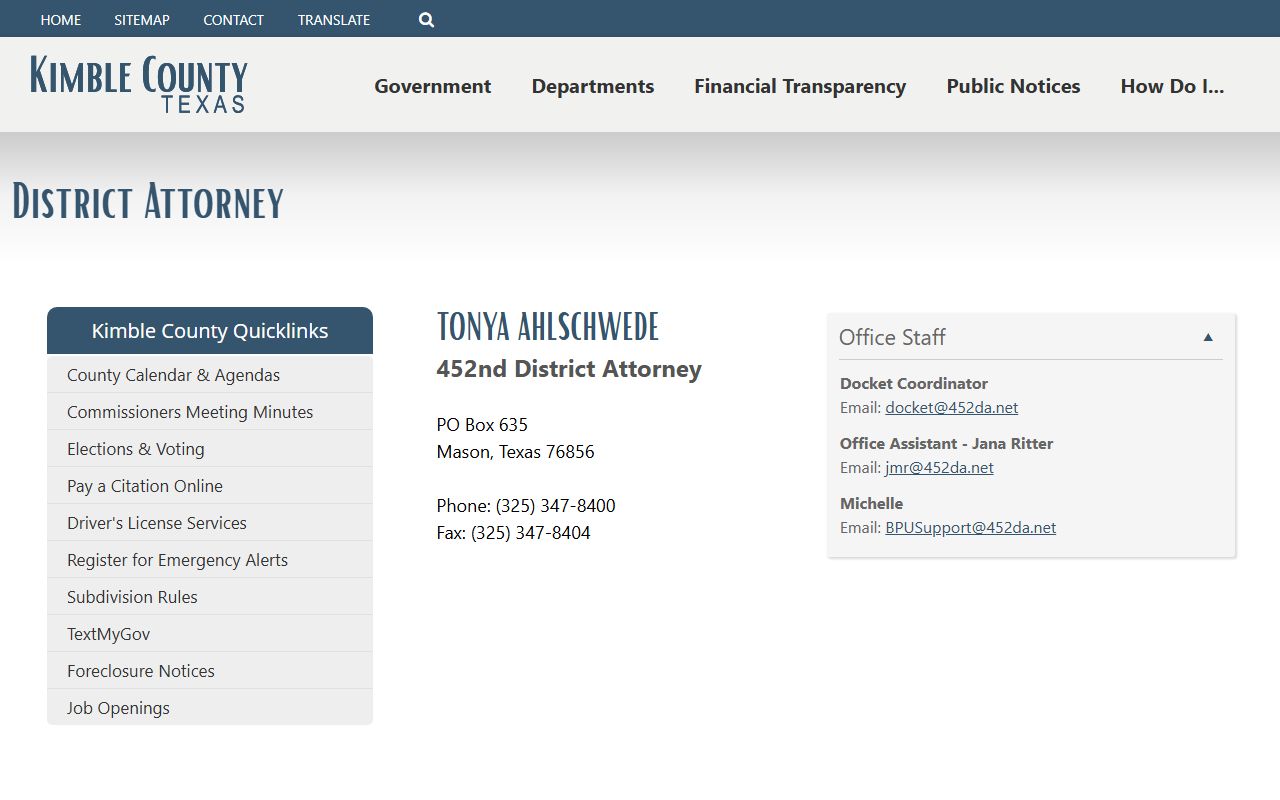
Prosecutor routing helps explain why a booking entry and a later court charge may not match word for word.
Kimble Charge Status Records
Charge status is the part of the court record that shows where the case stands. Court records after a Kimble County arrest may show a charge as pending while the case is active, amended if the wording or count changes, reduced if the prosecutor or court lowers the allegation, dismissed if the charge ends without conviction, acquitted after a not-guilty finding, or convicted after a guilty plea or verdict. Deferred or supervision outcomes should be read from the actual court record because Texas terminology can vary by case type.
| Status | Meaning | Why It Matters |
|---|---|---|
| Pending | The case has not been resolved. | Future court settings or bond conditions may still apply. |
| Amended | The filed charge changed after the first filing. | The court record may differ from the booking charge. |
| Reduced | The charge was changed to a lesser offense. | Penalty range and court handling may change. |
| Dismissed | The court or prosecutor ended the charge without conviction. | Expunction may be worth reviewing if the case qualifies. |
| Convicted | A guilty plea, verdict, or qualifying adjudication appears. | Sentencing or later TDCJ custody may follow. |
Bond Records After Kimble Arrest
Bond is set through the post-arrest court process, not just the jail desk. The sheriff page states that magistrate court occurs every morning at 9:00 a.m. Central Time. Texas Code of Criminal Procedure Article 15.17 covers the magistrate warning process, and Article 17.15 lists rules for setting bail, including the nature of the offense, ability to make bail, and community or victim safety.
| Bond Type | How It Works | Kimble County Note |
|---|---|---|
| Cash bond | The full amount is paid in approved funds. | Payment methods were not published; call first. |
| Surety bond | A licensed bail bond company posts bond for a fee. | No Kimble bondsman list was located in official sources. |
| Personal or PR bond | Release is based on a written promise and conditions. | The magistrate or court decides eligibility. |
| No-bond hold | Release is blocked because bond is unavailable or another hold controls. | Ask whether a warrant, detainer, or other agency hold exists. |
Warrants and Court Arrest Records
No official Kimble County sheriff active-warrant search, most-wanted list, or public warrant roster was located. A warrant question should route to the agency or court that issued it. Call the sheriff at 325-446-2766 for sheriff warrant and custody questions, contact the Justice of the Peace at 325-446-2281 for JP matters, or search the criminal case portal and clerk records for filed criminal cases. A person who may have an active warrant should consider legal counsel because appearing at a law-enforcement counter can result in arrest.
Once a warrant leads to a booking, the court record after arrest can show the issuing court, charge, failure-to-appear history, bond status, or capias entries. If the warrant came from outside Kimble County, release from the Kimble jail may still be blocked by an outside hold even after a local bond is set.
Charges and Convictions Compared
A charge is an accusation in the court record. A conviction is a final or qualifying court outcome. Court records after a Kimble County jail arrest may show both at different points, but they should never be treated as the same thing. The court file is the source for whether a charge stayed pending, changed, was dismissed, or ended in conviction.
| Topic | Charge | Conviction |
|---|---|---|
| Stage | Filed accusation after arrest. | Result after plea, trial, or qualifying adjudication. |
| Proof level | Based on probable cause and filing standards. | Requires a plea, verdict, or court finding. |
| Record use | Shows what was alleged. | Shows the legal outcome and sentence if imposed. |
Sealed and Expunged Arrest Records
Texas records can be limited by sealing, nondisclosure, or expunction rules, but the terms are not identical. Code of Criminal Procedure Chapter 55 governs expunction of qualifying arrest records. Business and Commerce Code Section 109.005 addresses certain business publication of criminal-record information after notice of expunction or nondisclosure. Eligibility depends on the exact disposition, timing, and record type.
| Topic | Sealed or Nondisclosed | Expunged |
|---|---|---|
| Public view | Limited from general public access. | Treated as removed under the court order. |
| Agency access | Some official access may remain. | Access is much more restricted after compliance. |
| Common trigger | Qualifying disposition or nondisclosure order. | Qualifying dismissal, acquittal, or other Chapter 55 route. |
Note: A sealed or expunged case may not appear online even when the arrest once produced a jail record.